
January 2026
Folding Time
I found the envelope the way I find most important things: by accident, and without realising I’d been waiting for it.
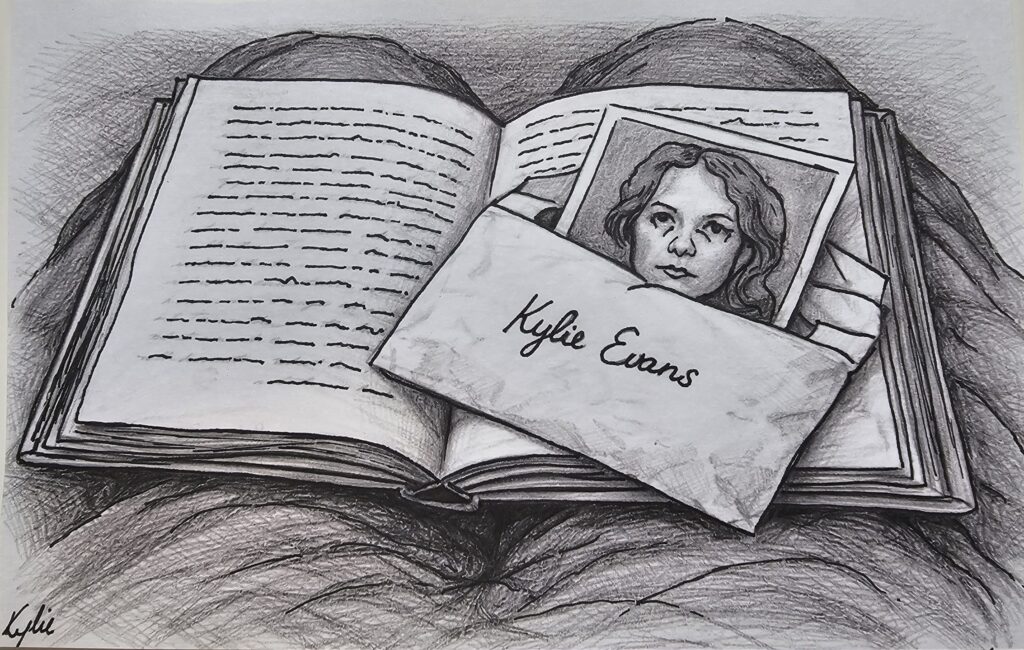
The book was a second-hand paperback; its spine cracked into a permanent frown. I’d bought it for the marginalia as someone had argued with the author in pencil, passionately, pettily. When the envelope slid out onto my lap, I assumed it was a receipt or a love note meant for someone else. The paper soft as cloth, my name written on the front in a careful, old-fashioned hand.
Inside was a photograph.
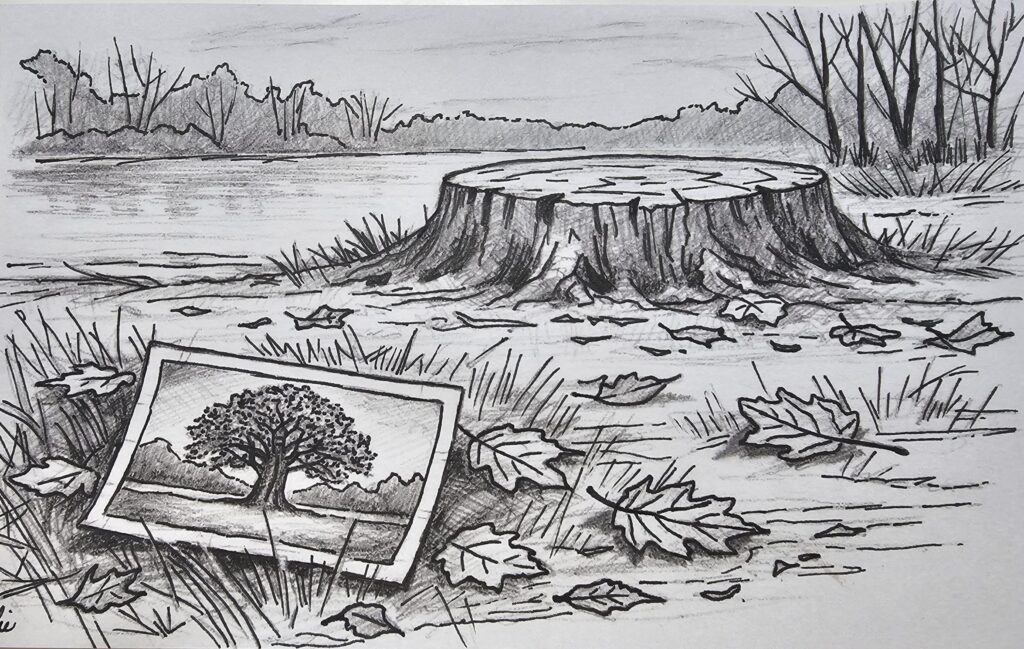
I knew it was me before my brain caught up enough to protest. Same crooked right eyebrow. Same scar on the opposite cheekbone from a rooster at two. I was standing in front of the old oak by the river, the one that was cut down when I was in high school, wearing a red jacket I wouldn’t own until decades later. On the back, in faded ink: Autumn, 1961.
I was born in 1971.
I laughed, because that’s what you do when reality tells a joke with no punchline. Then I stopped, because the photo was too precise to be fake. Even the way my hands were half-curled like I was about to apologise, was unmistakably me.
There was also a note.
“You’re not supposed to find this yet,” it said. “But timing was never your strong suit.”
The note went on, written in the same neat hand as my name. It didn’t explain how the photo existed. It didn’t mention time travel or paradoxes. It only said: “On Thursday, go to the river at dusk. Bring the book.”
I didn’t sleep. I kept the photo by my bed, face-down. By Thursday, curiosity had outpaced fear, which is how most bad decisions begin.
The river was low, the air cool and still, carrying the faint smell of damp leaves. The oak was gone, but its stump remained. Someone was already there, sitting on it, turning the pages of my second-hand book.
She looked up as I approached.
She was older, worn in places I wasn’t yet. Same eyes that suggested laughter and regret in equal measure.
“You came,” she said. My voice, but steadier.
“Obviously,” I replied. “You took my photo.”
She smiled. “You always start with an accusation.”
We talked until the light thinned and the mosquitoes declared war. She didn’t tell me everything, but it was enough: that some moments fold instead of moving forward, that the book mattered because it taught us to argue with the world instead of accepting it.
“Does this fix anything?” I asked.
She considered that. “It changes things. That’s different.”
When it was time, she handed me the envelope. Weathered now. “You’ll forget parts of this,” she said gently. “But you’ll remember the feeling. Trust it.”
Then she walked away, down a path I knew by heart.
I slid the envelope back into the book after writing my name on the front.
I wasn’t supposed to find it yet.
But timing was never my strong suit.
#FPAShortStory
Copyright © 2026 K. L. Evans
November 2025
Paper Birds
Every morning, Lila took a letter she had never sent and folded its words into a bird.
She released it into the wind, and it carried the letter’s sorrow, joy, or secret across the city.
Neighbours whispered of the origami flock, tracing their movements like migrating clouds.
Some swore the birds returned, crumpled and unread, others bearing answers in their fragile wings.
One late September evening, Lila opened a letter she didn’t remember writing – inside, her own handwriting begged forgiveness for a mistake she hadn’t yet made.
Without warning, the paper bird leapt from her hand, and the city paused, listening.
#101WordStory
Copyright © 2026 K. L. Evans
November 2025
The Day the Universe Came Loose
The universe unraveled last Tuesday.
Not with haste, but with a single gentle tug.
Astronomers watched galaxies fray like old sweaters. Children laughed, tying loose strands into bracelets.
Someone plucked the cosmos and heard a single, trembling note – perfect, eternal.
Then silence, and one word whispered through the void: “Knot.”
Everything began again.
#53WordStory
Copyright © 2026 K. L. Evans
2001
Item 7
The list lives in the notes app on my phone, sandwiched between a grocery reminder and a half-written message I never sent.
Things I Have Forgiven Myself For
I started it on a night when sleep felt optional and punishment felt productive. It seemed healthier than the alternative. A way to inventory damage without reopening every wound.
- Not knowing better.
- Knowing better and doing it anyway.
- Leaving when staying would have felt heroic but ruined me.
- Staying when leaving would have been cleaner.
- Wanting more.
- Asking for less.
The list grew slowly. I only added things once they stopped hurting in sharp ways. Dull pain was allowed. Nostalgia, even. But nothing that still made my throat close when I thought about it.
That was the rule.
For a while, it worked. I’d add an item, reread it once or twice, then feel something loosen. Like labeling a box before shoving it into a closet.
I don’t remember when I first deleted it. I remember the relief, though. The small, smug satisfaction of deciding it no longer belonged to me.
The list renumbered itself automatically, as if it agreed.
I opened the app, it was there again.
7. The way I left without explaining.
Same wording. Same place.
I deleted it again, more deliberately this time, then locked my phone.
It came back a week later.
I told myself it was a quirk of the app, some syncing error between devices.
I tried rewriting it.
7. Leaving was necessary.
It stayed for a day. Then reverted.
7. The way I left without explaining.
I began to notice how often I scrolled past it. How my thumb slowed there, just slightly. The words felt heavier than the others, more specific. Less abstract. The rest of the list could apply to almost anyone. This one had a shape. A door. A moment.
I remembered the room. The half-packed boxes. The look on his face when I said I couldn’t do this anymore and meant it.
I’d always framed it as mercy. Less explanation meant less pain. Clean breaks heal faster. That’s what I told myself, and eventually, I believed it.
That’s what forgiveness had looked like: a story I could live inside.
One night, after a drink too many and a day that had gone wrong in quiet ways, I tapped the item instead of scrolling past it.
Nothing happened. No submenu. No edit cursor.
I held my thumb there longer than necessary, like pressure alone might change something.
For the first time, I wondered if the list wasn’t tracking forgiveness at all.
Maybe it was tracking avoidance.
The next morning, the list had changed.
7. The way I left without explaining.
8. The relief I felt afterward.
That one was new.
I stared at it until my coffee went cold. Relief wasn’t something I’d planned to forgive myself for. Relief felt honest. Undeniable. It had carried me through weeks I wouldn’t have survived otherwise.
I deleted Item 8 immediately.
It didn’t come back.
Item 7 remained.
That was when I understood the problem. I hadn’t forgiven myself for leaving. I’d forgiven myself for needing to.
The list didn’t care about my reasons. It wasn’t interested in context or self-compassion or growth. It wanted acknowledgement.
So I did the one thing I’d been avoiding since the beginning.
I opened a new note.
Things I Haven’t Been Forgiven For
I wrote one line.
Leaving without explaining.
I didn’t feel better. Nothing loosened. But the list stopped changing after that. Item 7 stayed where it was, quiet and unremarkable, like it had finally been named correctly.
Some things, I’m learning, don’t want absolution.
They just want to stop being rewritten.
Copyright © 2026 K. L. Evans